
Welcome to the web page of the exhibition “Together for an inclusive future”
On this page, find out more about our interactive traveling exhibition, its content, and the supporting research projects and scientific references.

The exhibition “Together for an Inclusive Future” is produced by the Centre for Interdisciplinary Research in Rehabilitation of Greater Montreal (CRIR) and its partners, to mark its 25th anniversary.
The goal of this exhibition is to support a dialogue between the scientific community of rehabilitation researchers and the general public about the importance of getting involved to make environments more inclusive.
Inclusive environments can reduce situations of disability experienced by the diverse group of people with disabilities who make up our society.
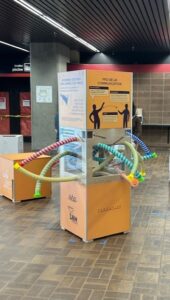
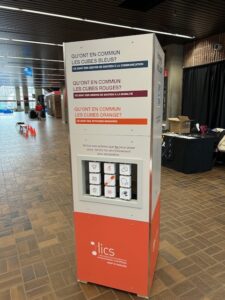
This exhibition will travel to various events within Greater Montreal over the coming years to reach the general public.


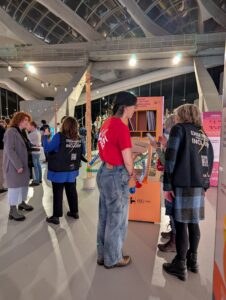
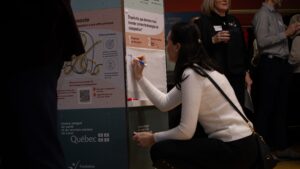

INTERACTIVE EXHIBITION SHINES ✨ AT SEVERAL PUBLIC EVENTS:
2025
✨Défi sportif AlterGo | April 28–May 2 — 💡Learn more: 📷 – 🎥
✨ Salon du véhicule adapté – Mémo QC (JRH) | June 1
✨ Semaine de la mission universitaire du CCSMTL (IURDPM) | November 10–13 — 💡Learn more: 📷
✨ Panel virtuel : Dialogue entre la recherche et le grand public | Novembre 13 — 💡Learn more: 📷 – 🎥
✨ Researchers’ Night – Espace pour la vie | Novembre 14 — 💡Learn more: 📷
✨ AGM & CRIR get-together evening 25th anniversary | Novembre 27 — 💡Learn more: 📷
2026
✨ Symposium scientifique sur l’incapacité visuelle et la réadaptation – 23e édition (INLB) | February 3
✨ Jewish Rehabilitation Hospital Research Day, CISSS de Laval (JRH) | March 11
✨ Défi sportif AlterGo |April 23 to May 1
✨ Scientific Rehabilitation Day of the CWCM (LLMRC) | Autumn
The exhibition will then be presented permanently at the Gingras–Lindsay‑de‑Montréal Rehabilitation Institute.
TO LEARN MORE ABOUT THE RESEARCH PROJECTS IN EACH SECTION OF THE EXHIBITION, CLICK ON THEIR NAMES:
Tower A: Rehabilitation Research for Inclusive Environments
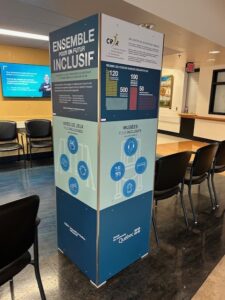
Learn more
 What is the Centre for Interdisciplinary Research in Rehabilitation of Greater Montreal (CRIR)?
For more information about the CRIR, click here
To watch the 7 video capsules from the “The Faces of CRIR Research” series, click here

Who benefits from CRIR’s research?
In Quebec, one person in five lives with a disability. By creating inclusive environments, many people benefit!
People of all ages living with sensory-motor, visual, auditory, cognitive or communication disabilities are included in our research.
 What are the concepts associated with inclusive environments?
For an explanation of disability according to the Human Development Model – Disability Creation Process (HDM-DCP), click here
To read the definition of “universal accessibility” used by our partner AlterGo, click here
 Which CRIR research projects look at strategies to make museums more inclusive?
- The project “Inclusive Museums” has drawn up a current state of the situation of universal accessibility in Quebec museums:
- Click here to access the research report (in French).
CRIR members involved : Eva Kehayia, Ph.D, (co-principal investigator), Tiiu Poldma, Ph.D. (co-investigator), Zakia Hammouni, Ph.D. (postdoctoral researcher)
- The project that has transformed the Montreal Museum of Fine Arts (MMFA) into a living laboratory for healthy seniors and stroke survivors, using wearable technologies :
Collaboration of nearly thirty researchers from Quebec and France, under the leadership of CRIR researchers Sylvie Nadeau, Ph.D. and Élaine de Guise, Ph.D.

Which CRIR research projects focus on the accessibility of stores and shopping centres?
- The “Rehab Mall” project, a living rehabilitation laboratory in the Alexis Nihon shopping center:
Collaboration of a team of more than 40 CRIR researchers, under the leadership of Eva Kehayia, Ph.D. and Bonnie Swaine, Ph.D
- The project “Bonjour, je voudrais un…”: Development of a guide to support people’s autonomy in their daily activities focusing on shopping. A training course has also been developed for speech-language pathologists and other health professionals who would like to incorporate the guide into their practice.
Project led by CRIR researcher Carole Anglade, Ph.D.

Which CRIR research projects look at strategies to make public transportation more inclusive?
- The evaluation of the Société de transport de Montréal’s (STM) training program aimed at facilitating the use of the bus and metro network by people with motor limitations:
- Click here to read the project description (in French)
Project led by Philippe Archambault, Ph.D. (researcher and CRIR Scientific Co-Director), in collaboration with nearly a dozen collaborators, including CRIR researchers Claire Croteau, Ph.D. and Isabelle Gélinas, Ph.D.
- The project that addresses employment for people with disabilities through access to public transportation:
- Click here to access the report (in French)
Project led by CRIR members Philippe Archambault, Ph.D. (researcher and CRIR scientific co-director), Alexandra Tessier, Ph.D. (postdoctoral researcher) and their team.

Which CRIR research project created an inclusive playground for children?
- The projet « PLAY : Participation in Leisure through Accessible plaYgrounds», which led to the inauguration of a new inclusive playground at the Philip E. Layton and Mackay Centre schools in September 2024:
- Cliquer sur les hyperliens suivants pour lire les différents articles sur l’inauguration de cette aire de jeu inclusive:
- In the « Childhood disability LINK » newsletter
- On the « Inspirations » website, published on September 27th, 2024
- On the « Inspirations » website, published on November 18th, 2024
- Cliquer sur les hyperliens suivants pour lire les différents articles sur l’inauguration de cette aire de jeu inclusive:
Project led by CRIR researcher Keiko Shikako, Ph.D., Mehrnoosh Movahed, MD, Ph.D. and their team.
Reference List
- Anglade, C., Le Dorze, G., & Croteau, C. (2019). Service encounter interactions of people living with moderate-to-severe post-stroke aphasia in their community. Aphasiology, 33(9), 1061-1082. https://doi.org/10.1080/02687038.2018.1532068
- Anglade, C., Le Dorze, G., & Croteau, C. (2021). How clerks understand the requests of people living with aphasia in service encounters. Clinical linguistics & phonetics, 35(1), 84-99
- Anglade, C. (2023). Bonjour, je voudrais un…Office des personnes handicapées du Québec. https://aphasiequebec.com/wp-content/uploads/2023/03/guide-aphasie-version-web.pdf
- de Guise E., Nadeau S., Trépanier, L., Higgins, J., Kehayia, E., Poldma, T. (2024). Étude de faisabilité sur l’utilisation de la technologie dans un milieu écologique au Musée des beaux-arts de Montréal auprès de personnes âgées en santé et celles ayant subi un accident vasculaire cérébral. Rapport de recherche. Montréal : CIUSSS du Centre-Sud-de-l’Île-de-Montréal, 36 p.
- Movahed, M., Martial, L., Poldma, T., Slanik, M., & Shikako, K. (2023). Promoting Health through Accessible Public Playgrounds. Children, 10(8), 1308. https://doi.org/10.3390/children10081308
- Percedda, A., Kehayia, E. (2024). Musées inclusifs: un état de la situation de l’accessibilité universelle dans les musées du Québec. https://societeinclusive.ca/wp-content/uploads/2024/06/Rapport-Musees-Inclusifs_vf_juin-2024.pdf
- Poirier S-È, Voyer L-A, Poulin V, Lamontagne M-E, Monetta L. Communication Challenges for People with Chronic Aphasia: A Systematic Qualitative Review of Barriers and Facilitators in Local Services. 2024; 4(3):616-631. https://doi.org/10.3390/disabilities4030038
- Fougeyrollas, P. (2010). La funambule, le fil et la toile : transformations réciproques du sens du handicap. Québec: Presses de l’Université Laval.
- Réseau international sur le Processus de production du handicap. (s.d). Le modèle. https://ripph.qc.ca/modele-mdh-pph/le-modele/
- Statistique Canada. (2023). Nouvelles données sur l’incapacité au Canada 2022. ISBN : 978-0-660-68708-7, Numéro au catalogue : 11-627-M. https://www150.statcan.gc.ca/n1/fr/pub/11-627-m/11-627-m2023063-fra.pdf?st=UWGFL7uV
- Tessier, A., Croteau, C., Le Dorze, G., Power, E., & Weiss, M. (2021). Exploring the effects of a communication partner training programme for adapted transport drivers. Aphasiology, 37(2), 179–204. https://doi.org/10.1080/02687038.2021.1994916
Tower B: Senses in Action
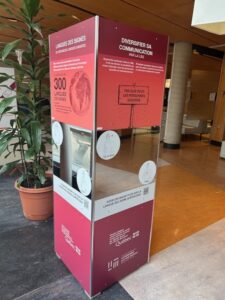
Learn more
How can learning braille contribute to independence and social participation?
 Click here to watch the excerpt from the AMI-télé program “Ça me regarde” (in French), where CRIR researcher Natalina Martiniello, Ph.D., CVRT, discusses the importance offering Braille learning strategies adapted to the needs of people of all ages.
Click here to learn how braille can support the independence and development of blind people, on the website of the Canadian National Institute for the Blind (CNIB).
Click here to watch CRIR research members Natalina Martiniello, Ph.D., CVRT, and Walter Wittich, Ph.D., FAAO, CLVT discuss the links between aging, braille and rehabilitation.
What can I do to support people who are blind or have low vision who use braille?
Click here to access a short article written by Natalina Martiniello, Ph.D., CVRT, which aims to undo unconscious biases about braille, and presents concrete everyday ways to become a braille ally.
If you would like to work with people with visual impairments, or contribute to the evolution of the practice of optometry worldwide, click here to learn more about the University of Montreal’s Master of Vision Sciences program.
Where can I learn more about braille?
 Click here to go to the website of Braille Literacy Canada (BLC), which offers a wealth of information and workshops on braille.
For online resources and activities for children, click here to access the “Braille Bug” website.
For more information about the needs of people with visual impairments, click here to access the Documentation Center of the Institut Nazareth et Louis-Braille of the CISSS de la Montérégie-Centre (in French).
ONLINE ACTIVITY – Want to see what your first name looks like written in braille?
Click here to access the game on the “Braille bug” website
 Where can I learn more about the status and use of sign languages around the world?
Click here to go to the United Nations (UN) web page celebrating International Sign Language Day, which takes place on September 23rd each year.
Where can I learn a few signs of the Langue des signes québécoise (LSQ) or American Sign Language (ASL)?
For general information: Click here to access the “Outils et ressources” page (in French) of the Association du Québec pour enfants avec problèmes auditifs (AQEPA). The website includes online dictionaries and glossaries, downloadable applications, video clips and training locations in your region.
 To teach your child a few signs LSQ : Click here to access AQEPA’s “Mes débuts en LSQ” page where you will find short video clips (in French).
To take a LSQ course : Click here to learn more about the courses offered by the CIUSSS du Centre-Sud-de-l’Île-de-Montréal.
To take an ASL course : Click here to learn more about courses offered by the CIUSSS West-Central Montreal.
Reference List
- Abbott, P., et Connors, E. (2020). Braille and Other Tactile Forms of Communication. Dans L. Helen et J. Ottowitz (ed.). Foundations of Vision Rehabilitation Therapy. (4e éd., p. 199-243) Louisville, KY: APH Press.
- Martiniello, N., Haririsanati, L., & Wittich, W. (2020). Enablers and barriers encountered by working-age and older adults with vision impairment who pursue braille training.Disability and Rehabilitation, 44(11), 2347–2362. https://doi.org/10.1080/09638288.2020.1833253
- Nation Unies. Défendez les droits des langues des signes ! Page consultée le 10 avril 2025 https://www.un.org/fr/observances/sign-languages-day
- Nations Unies. Le braille, un outil indispensable et universel pour les aveugles et les malvoyants. Page consultée le 10 avril 2025 https://www.un.org/fr/desa/world-braille-day-2018
- Ryles, R. (1996). The Impact of Braille Reading Skills on Employment, Income, Education, and Reading Habits.Journal of Visual Impairment & Blindness, 90(3), 219-226. https://doi.org/10.1177/0145482X9609000311
- Thompson, R. H., Cotnoir-Bichelman, N. M., McKerchar, P. M., Tate, T. L., & Dancho, K. A. (2007). Enhancing early communication through infant sign training. Journal of applied behavior analysis, 40(1), 15–23. https://doi.org/10.1901/jaba.2007.23-06
- Wright, T., Wormsley, D. P., & Kamei-Hannan, C. (2019). Hand Movements and Braille Reading Efficiency: Data from the Alphabetic Braille and Contracted Braille Study. Journal of Visual Impairment & Blindness, 103(10), 649-661. https://doi.org/10.1177/0145482X0910301008 (Original work published 2009)
Tower C: Communication Pro
Learn more
Why is it said that at least 30% of the population lives with communication barriers?
 About 7% of the population has a developmental language disorder (DLD), i.e. a neurological disorder that manifests itself as significant difficulties in the development, learning, use and mastery of language. To learn more about DLD, click here
- Nearly 35% of the Quebec population is functionally illiterate, meaning that they can read and write simple sentences, but have difficulty understanding more complex texts. These people may also have difficulty with oral comprehension.
- About 14% of the Quebec population is allophone, meaning that their mother tongue or the language spoken at home is other than French or English. Proficiency in French and English varies among these individuals.
- About 1% of the population suffers from stuttering, i.e. a fluency disorder characterized by an interruption in the rhythm of speech. To learn more about stuttering, click here
- Between 25% and 40% of people who have suffered a stroke develop aphasia. In Quebec, this represents 6,000 new people per year. Aphasia is a communication disorder caused by damage to the brain that affects the ability to speak, understand, write and read. To learn more about aphasia, click here (in French)

The communication strategies presented in the exhibition are likely to facilitate interactions with everyone, but this is even more true for people with communication obstacles listed above!
How can you adapt your documents to the needs of people with visual limitations?
 The Institut Nazareth et Louis-Braille (CISSS de la Montérégie-Centre) is part of the CRIR and stands out for its expertise in visual impairment. Their website is full of useful resources:
- Click here to read the « Guide pratique pour vos documents imprimés » (in French)
- Click here to find out about the training offered on accessible documents
- Click here to learn more about the “Service d’adaptation de l’information” which offers personalized services to individuals and organizations wishing to make their documents, websites, digital platforms or applications accessible to people living with functional limitations.
Reference List
- Desrosiers, H., Nanhou, V., Ducharme, A., Cloutier-Villeneuve, L., Gauthier, M.-A., et Labrie, M.P. (2015). Les compétences en littératie, en numératie et en résolution de problèmes dans des environnements technologiques : des clefs pour relever les défis du XXIe siècle. Rapport québécois du Programme pour l’évaluation internationale des compétences des adultes (PEICA), Québec, Institut de la statistique du Québec, 249 p. https://statistique.quebec.ca/fr/fichier/competences-en-litteratie-en-numeratie-et-en-resolution-problemes-dans-environnements-technologiques-clefs-pour-relever-defis-xxie-siecle.pdf
- Institut de la statistique du Québec. Répartition de la population selon la langue maternelle, régions métropolitaines de recensement (RMR) du Québec, 2011, 2016 et 2021. https://statistique.quebec.ca/fr/document/langue-maternelle-parlee-maison-connaissance-francais-anglais/tableau/repartition-population-selon-langue-maternelle#tri_tertr=A
- Norbury, C. F., Gooch, D., Wray, C., Baird, G., Charman, T., Simonoff, E., Vamvakas, G., et Pickles, A. (2016). The impact of nonverbal ability on prevalence and clinical presentation of language disorder: evidence from a population study. Journal of child psychology and psychiatry, and allied disciplines, 57(11), 1247–1257. https://doi.org/10.1111/jcpp.12573
- Office québécois de la langue française. (2021). Caractéristiques linguistiques de la population du Québec en 2021. https://www.oqlf.gouv.qc.ca/ressources/sociolinguistique/2022/Feuillet_Car-ling-pop-Quebec-2021.pdf
- Ordre des orthophonistes et audiologistes du Québec. Le trouble développemental du langage (TDL). (2021). https://www.ooaq.qc.ca/media/wlmcmg0p/brochure-trouble-developpemental-du-langage-2024.pdf
- Ordre des orthophonistes et audiologistes du Québec. Le bégaiement (ou trouble de la fluiditié).(2020). https://www.ooaq.qc.ca/consulter/orthophoniste/begaiement-trouble-fluidite/#:~:text=D%C3%A9finition%20du%20b%C3%A9gaiement,jamais%20trop%20tard%20pour%20intervenir.%20%C2%BB
Tower D: Every Gesture Counts
Learn more
Do you know about programs and services that support the social participation of people with different disabilities?
Here are a few examples:
 The programs, measures and services offered by the Quebec government for people with disabilities, their families and loved ones. Click here to find information related to the topics below:
- Mobility and adapted transport
- Leisure, sport, tourism and culture
- Employment and adapted work
- Education and schooling
- Family and personal support
- Housing and accommodation
- Health and technical aids
- Financial and tax measures
- The Info-services capsules from the Office des personnes handicapées du Québec (OPHQ) are also an effective way to find out about the range of services available. Click here to access these informative capsules (in French).
 The Inclusive Mobility Program launched by the Autorité régionale de transport métropolitain (ARTM), the Réseau express métropolitain (REM) and the public transit organizations of the Greater Montreal Area offers a learning program to help people with functional limitations familiarize themselves with the use of bus, metro, train and REM networks. The program includes theoretical group training and individual practice on routes specific to each person’s needs. Click here to find out more.

How can I do my part on a daily basis?
Click here to find ideas for simple actions that everyone can take to break down barriers and contribute to a more inclusive future.
Reference List
- Rochette, A., Roberge-Dao, J., Roche, L., Kehayia, E., Ménard, L., Robin, J. P., Sauvé, M., Shikako-Thomas, K., St-Onge, M., Swaine, B., Thomas, A., Vallée-Dumas, C., & Fougeyrollas, P. (2022). Advancing social inclusion of people with disabilities through awareness and training activities: A collaborative process between community partners and researchers. Patient education and counseling, 105(2), 416–425. https://doi.org/10.1016/j.pec.2021.05.032
- Wittich, W., Granberg, S., Wahlqvist, M., Pichora-Fuller, M. K., & Mäki-Torkko, E. (2021). Device abandonment in deafblindness: a scoping review of the intersection of functionality and usability through the International Classification of Functioning, Disability and Health lens.BMJ open, 11(1), e044873. https://doi.org/10.1136/bmjopen-2020-044873
Tower E: Technology and Rehabilitation

Learn more
Rehabilitation is above all a story of collaboration.

Every person, every environment, and every area of expertise plays an essential role in supporting inclusion and well-being.
At the heart of this ecosystem, CRIR brings together 22 areas of research expertise to advance rehabilitation in all its forms.
📍Discover the laboratories and research groups of CRIR researchers, classified according to their areas of research here: https://crir.ca/en/research/laboratories/Ce lien s’ouvrira dans une nouvelle fenêtre”
Technology can transform rehabilitation by increasing autonomy, simplifying everyday tasks, and opening up new possibilities for inclusion.
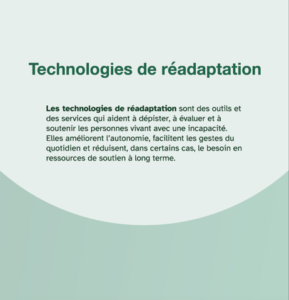
These technologies remind us that innovation is not just a matter of science, but also of dignity, access, and independence.
📍Discover UTech, an interactive shared resource developed by CRIR members in collaboration with other Quebec researchers to support knowledge mobilization and expertise in rehabilitation technology assessment here: https://utech.repar.ca/home/about
To keep your bones strong, you have to work them! When you spend a lot of time sitting, your bones weaken and the risk of fracture increases. Among people who use wheelchairs, about one in ten suffers a fracture each year due to osteoporosis. Assistive robots replace human effort in tasks such as walking or picking up an object.
People with paralysis have been able to use their arms to perform tasks thanks to a rehabilitation robot.
- Norouzi-Gheidari, N., Archambault, P. S., & Fung, J. (2020). Changes in arm kinematics of chronic stroke individuals following “Assist-As-Asked” robot-assisted training in virtual and physical environments: A proof-of-concept study. Journal of Rehabilitation and Assistive Technologies Engineering, 7, 2055668320926054
The exoskeleton helps users stand up and walk, which stimulates the bones and keeps them healthy.
- Bass, A., Morin, S. N., Guidea, M., Lam, J. T. A. T., Karelis, A. D., Aubertin-Leheudre, M., Gagnon, D. H., & Montreal Exoskeleton Walking Program (MEWP) Group (2024). Potential Effects of an Exoskeleton-Assisted Overground Walking Program for Individuals With Spinal Cord Injury Who Uses a Wheelchair on Imaging and Serum Markers of Bone Strength: Pre-Post Study. JMIR rehabilitation and assistive technologies, 11, e53084. https://doi.org/10.2196/53084 Ce lien s’ouvrira dans une nouvelle fenêtre”
Magnetic or electrical stimulation involves applying mild currents to the brain, nerves, or muscles to promote recovery and rehabilitation.
We combine different interventions (e.g., physical exercise) and techniques (e.g., non-invasive brain stimulation) to design treatments for people who need to recover from a stroke or slow down their physical and cognitive decline.
📍CRIR researchers are part of the Canadian CanStim consortium, which studies non-invasive brain stimulation combined with neurorehabilitation exercises to promote motor recovery.
- Hildesheim, F. E., Silver, A. N., Dominguez-Vargas, A. U., Andrushko, J. W., Edwards, J. D., Dancause, N., & Thiel, A. (2022). Predicting individual treatment response to rTMS for motor recovery after stroke: a review and the CanStim perspective. Frontiers in Rehabilitation Sciences, 3, 7953
Repetitive transcranial magnetic stimulation
Transcranial magnetic stimulation is used to stimulate the brain and improve motor, memory, and language performance, among other things.
Repetitive transcranial magnetic stimulation (rTMS) can be used to improve upper limb motor recovery after stroke. The CanStim project has developed expert consensus recommendations for the use of rTMS after stroke.
- Edwards, J. D., Black, S. E., Boe, S., Boyd, L., Chaves, A., Chen, R., … & Thiel, A. (2021). Canadian platform for trials in noninvasive brain stimulation (CanStim) consensus recommendations for repetitive transcranial magnetic stimulation in upper extremity motor stroke rehabilitation trials. Neurorehabilitation and Neural Repair, 35(2), 103-116.
The use of anodal transcranial direct current stimulation (tDCS) on the primary motor cortex can improve motor learning of a grasping task and contribute to hand rehabilitation after stroke.
- Fan, J., Voisin, J., Milot, M. H., Higgins, J., & Boudrias, M. H. (2017). Transcranial direct current stimulation over multiple days enhances motor performance of a grip task. Annals of physical and rehabilitation medicine, 60(5), 329-333.
CIME (Clinic for Intensification and Neuromodulation for People with Spinal Cord Injury) is a clinic that has been applying neurostimulation in one of the CRIR facilities since 2023 for people with spinal cord injury. This clinic conducts research projects aimed at evaluating the impact of innovative therapies combining best clinical practices in rehabilitation with neuromodulation, i.e., electrical or magnetic stimulation applied to the nerves, brain, or spinal cord to modify the activity of the nervous system.
The Memory and Motor Rehabilitation Laboratory is interested in studying the mechanisms of neuroplasticity in order to develop new and more effective interventions to improve the physical and cognitive well-being of different populations.
The Tongue project led by Marie-Hélène Boudrias, a researcher at CRIR, explores how and whether tongue stimulation can help improve upper limb motor function and brain plasticity in people in the chronic stage of stroke. To learn more about this innovative research, listen to the following podcast: https://www.cbc.ca/listen/live-radio/1-79-breakaway/clip/16178912-researchers-restoring-arm-mobility-stroke…-tongue
3D printing makes it possible to quickly manufacture customized 3D objects such as orthotics Bleau, M., van Acker, C., Martiniello, N., J. P. Nemargut, Ptito, M. Cognitive map formation in the blind is enhanced by three-dimensional tactile information. Sci Rep 13, 9736 (2023)., therapy tools, and tactile maps.
Project on learning a route memorization task through the production of tactile maps:
- Bleau, M., van Acker, C., Martiniello, N., Nemargut, J. P., & Ptito, M. (2023). Cognitive map formation in the blind is enhanced by three-dimensional tactile information. Scientific Reports, 13(1), 9736. https://doi.org/10.1038/s41598-023-36578-3 Ce lien s’ouvrira dans une nouvelle fenêtre”
What if rehabilitation could take place in a virtual world?
Augmented reality adds virtual images to the real world. It guides exercises and helps people learn new movements.
Virtual reality is a digital world that participants enter using headsets or screens to practice tasks in a safe and motivating way.


Here are some examples of CRIR research projects on virtual reality and augmented reality in the context of rehabilitation.
| Domain | Study | Population | Focus |
| Multidomain (Physical + Cognitive or Mixed Impact) | Bühler, M. A., & Lamontagne, A. (2025). Obstacle Circumvention Strategies During Omnidirectional Treadmill Walking in Virtual Reality. Sensors, 25(6), 1667. | Healthy adults | Physical adaptability and cognitive-motor integration during walking in VR |
| MARCHER+ Project (Nadeau, Kehayia, Lamontagne, Fung, Higgins, Duclos) | Stroke | Augmented gait training to improve community walking capacity — Physical & Cognitive impact | |
| Villeneuve, M., Ogourtsova, T., Deblock-Bellamy, A., Blanchette, A., Bühler, M. A., Fung, J., & Lamontagne, A. (2023). Development of a VR-based intervention for community walking post stroke. Disability and Rehabilitation, 46(19), 4428–4438. | Stroke | Physical & Cognitive impact; Acceptability and feasibility focus | |
| Combination of hand exoskeleton and VR (Higgins, Gagnon, Proulx) | OTs & Stroke | Feasibility, usability, and functional gains with a soft robotic glove + VR
|
|
| Physical/Motor | Crosbie, J., Lennon, S., McGoldrick, M., McNeill, M., & McDonough, S. (2012). VR in arm rehabilitation after hemiplegic stroke. Clinical Rehabilitation, 26(9), 798–806. | Stroke | Upper limb motor recovery using VR |
| Levin, M. F., Berman, S., Weiss, N., et al. (2023). ENHANCE proof-of-concept trial. Scientific Reports, 13, 22934. | Stroke | Reaching training within spasticity-free range using VR + electrical stimulation | |
| Charles, D., Holmes, D., Charles, T., & McDonough, S. (2020). Virtual Reality Design for Stroke Rehabilitation. In Biomedical Visualisation (Vol. 1235). Springer. | Stroke | VR design for upper limb rehabilitation — system design guide | |
| Gulcan, K., Guclu-Gunduz, A., Yasar, E., et al. (2023). Effects of AR and VR gait training in Parkinson’s disease . Acta Neurologica Belgica, 123(5), 1917–1925. | Parkinson’s | Gait and balance training | |
| Combination of electrical stimulation and VR (ENHANCE – Levin et al.) | Stroke | Physical motor recovery combining electrical stimulation and VR | |
| Psychosocial / Emotional | Mind control: Virtual journey to adolescent tranquility (Ogourtsova, T.) | Youth with developmental disorders | Emotional and psychosocial impact — improving emotional regulation and well-being via immersive VR relaxation and e-coaching |
The Human Development Model – Disability Production Process

The Modèle de développement humain – Processus de production du handicap shows that the realization of lifestyle choices can be influenced by capacity building or compensation for disabilities through rehabilitation and assistive technology, but also by reducing barriers in the environment. Discover the Modèle de développement humain – Processus de production du handicap; a conceptual framework developed in Quebec that aims to document and explain the causes and consequences of diseases, injuries, and other impairments to a person’s integrity or development here: https://ripph.qc.ca/modele-mdh-pph/le-modele/.
In the context of this model, rehabilitation technologies are part of the environment and can support full participation.
The rehabilitation and inclusion process is based on collaboration between the individual, their family and friends, and the communities that support them, in order to promote their independence, social participation, and quality of life.
Together, these approaches redefine what it means to function fully in society.
Your opinion matters :
What rehabilitation technologies do you think we should invent?

Tower F: Arts and Rehabilitation

Learn more
Rehabilitation needs affect 2.41 billion people worldwide, and the number of years lived with disabilities has increased by 63% over the past 30 years.

- Cieza, A., Causey, K., Kamenov, K., Hanson, S. W., Chatterji, S., & Vos, T. (2021). Global estimates of the need for rehabilitation based on the Global Burden of Disease study 2019: a systematic analysis for the Global Burden of Disease Study 2019. Lancet (London, England), 396(10267), 2006–2017. https://doi.org/10.1016/S0140-6736 (20)32340-0 Ce lien s’ouvrira dans une nouvelle fenêtre”
Access to culture, science, and the arts is a fundamental human right.
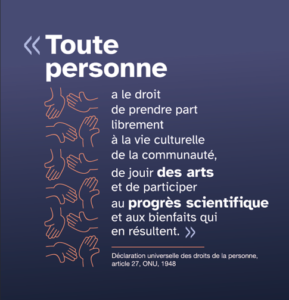
In accordance with the Universal Declaration of Human Rights, the exhibition aims to show that inclusion also involves cultural and scientific participation. Everyone should be able to create, learn, and enjoy collective advances, regardless of their abilities.
Rehabilitation and accessibility are not only about health, but also about full participation in cultural and social life.
📍Discover the Universal Declaration of Human Rights, drafted in 1948, here: https://www.un.org/fr/universal-declaration-human-rights/Ce lien s’ouvrira dans une nouvelle fenêtre”
What if art became a driver of rehabilitation?
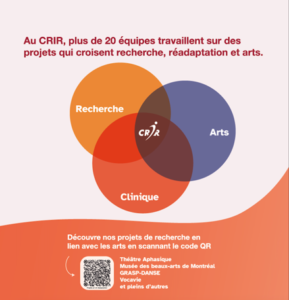 By mobilizing creativity and personal expression, art can support recovery, inclusion, and self-confidence.
From dance to visual arts, singing and theater, some CRIR projects explore how artistic creation and participation can support rehabilitation, enhance well-being, and promote inclusion.
📍Discover two inspiring CRIR initiatives: a social circus program and dance therapy. These projects demonstrate how creativity can become a powerful driver of independence, inclusion, and personal transformation for people living with physical disabilities. Find out more (in French): https://iurdpm.ca/fr/actualite/art-et-culture-en-readaptation-le-magazine-moelle-epiniere-et-motricite-met-en-lumiere-les-approches-novatrices-du Ce lien s’ouvrira dans une nouvelle fenêtre”
dance
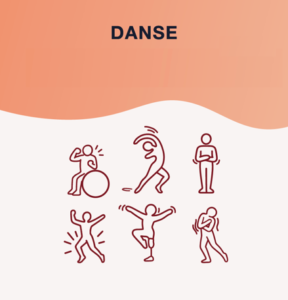
Adapted dance after a stroke has several benefits. It helps restore mobility and improve the quality of movement. Participants also report increased confidence, motivation, and emotional well-being.
Music and movement promote enjoyment, which increases adherence to the exercises. In addition, these sessions create opportunities for socialization, reducing isolation.
Finally, dance can complement traditional rehabilitation by offering a more creative and engaging approach, while respecting each person’s abilities.
- Beaudry, L., et al. (2025). Dance and Somatic-Informed Movement in an Acute Inpatient Stroke Unit: A Feasibility Study. Medicina, 61(6), 966. https://doi.org/10.3390/medicina6100966
- Beaudry, L., et al. (2019). Adapted-dance intervention for subacute rehabilitation post-stroke: ‘WHAT’ and ‘HOW’. Research in Dance Education, 20(3), 267–284. https://doi.org/10.1080/14647893.2019.1644617
- Beaudry, L., et al. (2020). Adapted Dance Used in Subacute Rehabilitation Post-Stroke: Impacts Perceived by Patients, Relatives and Rehabilitation Therapists. Disability and Rehabilitation, 42(21), 3061–3070.
- Beaudry, L., et al. (2019). Use of Adapted Dance to Intensify Subacute Rehabilitation Post-Stroke: A Qualitative Study on the Participation Experience , and Active Participation Time. Alternative Therapies in Health and Medicine, 25(6), 8–17.
📍Lucie Beaudry receives a grant for the “GRASP-DANSE” research project – Dance Department – UQAMCe lien s’ouvrira dans une nouvelle fenêtre”
theater
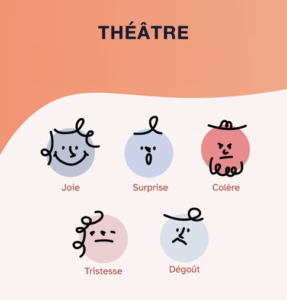 The Théâtre Aphasique acts as a complement to rehabilitation for people living with aphasia. It promotes functional communication through multimodal strategies and practice in a real-life context. Participants develop self-confidence, motivation, and enjoyment, which supports perseverance in the rehabilitation process. Theater also contributes to social participation and community reintegration by reducing isolation and creating a sense of belonging. Finally, it provides a safe environment that reduces anxiety and encourages expression, thereby reinforcing the gains made in speech therapy rehabilitation.
- Fakhfakh, E. (2023). Theater for reintegration: exploring the benefits of participating in activities offered by Théâtre Aphasique [Master’s thesis]. https://umontreal.scholaris.ca/items/52d685e6-f0ef-43d1-b552-e31d690937e9
- García, A. O., Verduyckt, I.*, et al. (2021). “I’m an artist, but with other tools!”: Le Théâtre Aphasique and the intersection between artistic and clinical practices with people living with aphasia. Canadian Journal of Disability Studies, 10(2), 130-161. https://doi.org/10.15353/cjds.v10i2.794
Ce lien s’ouvrira dans une nouvelle fenêtre”
The Segal Centre project explores the co-creation of an inclusive theatrical performance in a performing arts center, actively involving stakeholders throughout the process. It highlights concrete recommendations for making theater accessible to all, including adapting the physical space, ensuring safety, developing technological tools, and integrating accessible language supports to promote the participation and inclusion of all audience members, regardless of their disability. The study demonstrates the importance of designing inclusive cultural spaces that meet the specific needs of people with disabilities, while promoting the participation of all audience members in theatrical experiences.
- Hammouni, Z. et al. (2021). Designing an Inclusive Theater Environment: Co-creating a Relaxed Performance Within the Segal Center for Performing Arts in Montreal. In: Shin, C.S., Di Bucchianico, G., Fukuda, S., Ghim , YG., Montagna, G., Carvalho, C. (eds) Advances in Industrial Design. AHFE 2021. Lecture Notes in Networks and Systems, vol 260. Springer, Cham. https://doi.org/10.1007/978-3-030-80829-7_29
Ce lien s’ouvrira dans une nouvelle fenêtre”
Music and singing
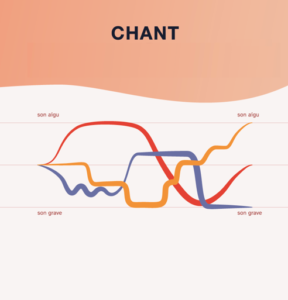
he Vocavie and IMAJ projects use art and voice to support communication and well-being. Vocavie offers online voice training sessions for people with Parkinson’s disease: warm-ups, vocal exercises, sometimes singing, followed by a chat.
These activities promote vocal clarity, confidence, and motivation and reduce social isolation, while helping participants maintain their speech therapy gains. IMAJ, at the Museum of Fine Arts, offers art therapy workshops that stimulate speech, encourage self-expression, and reinforce feelings of pride. These approaches complement traditional rehabilitation.
- Hallé, M.-C., Delorme, C., Coulombe, É., Rekik, O., & Verduyckt, I.* (2022). Participants’ perspective on a COVID-19 online vocal group stimulation for people with Parkinson’s disease. Frontiers in Rehabilitation Sciences, 3, 951426. https://doi.org/10.3389/fresc.2022.951426
- Verduyckt, I.* et al. (2017). IMAJ Group – Alternative approaches to communication support [Pilot project poster]. Montreal Museum of Fine Arts.
- Vocavie. (2025). Voice Training Program. https://www.vocavie.com/programmes
Music-Supported Therapy (MST) uses instruments such as the piano or percussion to stimulate motor recovery after a stroke. This approach promotes coordination, speed, and precision of upper limb movements. Music acts as a powerful motivator and source of enjoyment, which increases adherence to therapy. By combining rhythm and movement, MST stimulates brain plasticity, strengthening motor and sensory circuits. It complements traditional rehabilitation by offering an engaging and creative experience tailored to the needs of people in the chronic phase after a stroke.
- Lamontagne, A., et al. (2013). Music-supported therapy for upper limb rehabilitation in chronic stroke: Randomized controlled trial. Stroke Research and Treatment, 2013, 159105. https://doi.org/10.1155/2013/159105
- Lamontagne, A., et al. (2021). Virtual reality-based assessment and rehabilitation of locomotor function after stroke: A systematic review. Brain Sciences, 11(5), 666. https://doi.org/10.3390/brainsci11050666
- Lamontagne, A., Fung, J., McFadyen, B. J., & Faubert, J. (2014). Modulation of walking speed by changing optic flow in persons with stroke. Frontiers in Human Neuroscience, 8, 662. https://doi.org/10.3389/fnhum.2014.00662
Practicing the piano helps restore dexterity and hand function, strengthens connections between the auditory and motor regions of the brain, stimulates motivation and enjoyment of learning, and promotes lasting independence even after treatment has ended.
- Villeneuve M, Penhune V, Lamontagne A. A piano training program to improve manual dexterity and upper extremity function in chronic stroke survivors. Front Hum Neurosci. 2014;8:662.
- Ghai S, Maso FD, Ogourtsova T, Porxas AX, Villeneuve M, Penhune V, et al. Neurophysiological Changes Induced by Music-Supported Therapy for Recovering Upper Extremity Function after Stroke: A Case Series. Brain Sci. 2021;11(5).
the circus

The Social Rehabilitation Circus uses circus arts, physical expression, and theater to support the transition to active living for young adults with physical disabilities. This approach promotes self-confidence, motivation, and a sense of competence, while developing physical skills (balance, coordination) and social skills. Participants report increased enjoyment, a sense of belonging, and reduced isolation. The program also contributes to social participation and a change in perception among young people and those around them, promoting their abilities.
- Loiselle, F. (2015). Impact of social circus (Cirque du Soleil) in a rehabilitation context on the social participation of young adults with physical disabilities in transition to working life: Qualitative study [Master’s thesis, University of Montreal]. https://papyrus.bib.umontreal.ca/xmlui/handle/1866/13898
- Loiselle, F., Rochette, A., & Bastien, J. (2018). Social circus program (Cirque du Soleil) promoting social participation of young people living with physical disabilities in transition to adulthood: A qualitative pilot study. International Journal of Adolescence and Youth, 23(3), 281–292. https://doi.org/10.1080/17518423.2018.1474502
Ce lien s’ouvrira dans une nouvelle fenêtre”
museums

For over 20 years, as part of its Le Musée en partage accessibility program, the MMFA has been offering free activities to community groups in order to promote encounters and make the benefits of art accessible to as many people as possible.
The MOB and NEURO-MBAM projects explore the impact of museum visits on the rehabilitation of people with physical disabilities. These interventions promote mobility (walking, endurance) in a stimulating and safe environment. They also improve psychological well-being, reducing stress and anxiety through the cognitive and emotional engagement stimulated by art. The use of wearable technologies and neurophysiological measurements allows interventions to be tailored and their effects documented. These innovative approaches move rehabilitation outside the hospital walls, promoting social participation and cultural inclusion.
- Dupuy, E. G., Vincent, T., Lecchino, C., Boisvert, A., Trépanier, L., Nadeau, S., de Guise, E., & Bherer, L. (2024). Prefrontal engagement predicts the effect of museum visit on psychological well-being: an fNIRS exploration. Frontiers in Psychiatry, 15, 1263351. https://doi.org/10.3389/fpsyt.2024.1263351
- CRIR & IURDPM. (2023). Transforming a museum into a living laboratory with wearable technologies. CRIR Branché, No. 08. https://crir.ca/partageons-nos-savoirs/crir-branche/transformer-un-musee-en-laboratoire-vivant-grace-aux-technologies-portables-janvier-2023-no-08/
The Words in the World project, in collaboration with the Montreal Museum of Fine Arts (MMFA), has developed a series of initiatives aimed at improving physical and linguistic accessibility and the inclusion of people with disabilities living with cognitive and language limitations at the museum.
- Brien, C., Jarema, G., Poldma, T., Alary Gauvreai, C., Giroux., L., Duhaime, J. & Kehayia, E. (2025). Improving linguistic accessibility of exhibit texts at the Montreal Museum of Fine Arts. In Museums for All. Regards croisés sur l’accessibilité universelle. Porcedda, A, Kehayia, E, Hamounni, Z. (Eds) ISBN: 9791037045584
📍Discover Musée pour tous (Museum for All), a book that explores how to make museums truly accessible to everyone through an inclusive and universal approach to culture: https://www.editions-hermann.fr/livre/musee-pour-tous-aude-porcedda Ce lien s’ouvrira dans une nouvelle fenêtre”
Thanks to our collaborators!
Scientific direction of the project
- Claudine Auger, Scientific Co-Director of the Centre for Interdisciplinary Research in Rehabilitation of Greater Montreal (CRIR) and the Institut universitaire sur la réadaptation de Montréal (IURDPM)
Scientific committee
- Carole Anglade, CRIR research member
- Louis-Charles Lasnier, École de design, Université du Québec à Montréal
- Natalina Martiniello, CRIR research member, person with experiential knowledge
- Frédérique Poncet, CRIR research member
- Stefano Rezzonico, CRIR research member
- Chantal Robillard, CRIR research member
Steering committee and local committees of CRIR sites
- Naima Abadi, CRIR member, clinical research coordinator
- Haifa Akremi, CRIR member, clinical research coordinator
- Philippe Archambault, CRIR scientific co-director
- Nancy Azevedo, CRIR managing member
- Dorothy Barthélemy, CRIR research member
- Chantal Bibeau, CRIR information officer
- Virginia Cornea, project manager and coordinator of the CRIR equity, diversity, inclusion, and accessibility committee
- Marika Demers, CRIR research member
- Nay El Hajj, CRIR student member
- Brigitte Fillion, CRIR manager
- Dahlia Kairy, CRIR research member
- Eva Kehayia, CRIR research member
- Frédéric Messier, CRIR member, knowledge transfer project manager at CCSMTL
- Alia Osman, CRIR student member and student representative of Axis I (CRIR student committee 2022-24)
- Danielle Thériault, CRIR acting administrative manager (2022-24)
Artistic design, content adaptation and production
- Sophie Beauparlant, head of the Laboratoire d’innovation en communication scientifique (LICS), teacher-researcher at the École supérieure en Art et technologie des médias (ATM), Cégep de Jonquière
- Claudia Bojanowski, CRIR partnerships and knowledge mobilization coordinator
- Aurélia Fleury, CRIR 25th Phase 2 exhibition coordinator, inclusive museology consultant
- Escouade l’Atelier, manufacturer of exhibition towers
- Amélie Ollat, college student, LICS, ATM, Cégep de Jonquière
- Annie Perron, designer specialized in research-based content, LICS, ATM, Cégep de Jonquière
Mediation of the exhibition
- Sara Ahmed, CRIR research member
- Carole Anglade, CRIR research member
- Philippe Archambault,CRIR scientific co-director
- Claudine Auger, CRIR scientific co-director
- Marie-Hélène Boudrias, CRIR research member
- Liziane Bouvier,CRIR research member
- Loredana Campo, CRIR student member
- Eloi Dierterlen, CRIR student member
- Marika Demers, CRIR research member
- Victoria Duda,CRIR research member
- Shirley Dumassais, CRIR student member, responsible for the exhibition mediation kit
- Emna Fakhfakh, CRIR student member
- Dahlia Kairy, CRIR research member
- Eva Kehayia, CRIR research member
- Quan Nha Hong, CRIR research member
- Sofia Lytvyn-Male, CRIR student member
- Mannat Madam,CRIR student member
- Etienne Marteau, CRIR student member
- Natalina Martiniello, CRIR research member, person with experiential knowledge
- Tatiana Ogourtsova, CRIR research member
- Fatimata Ouédrago, CRIR student member, representative of the CRIR student committee (2024-)
- Frédérique Poncet, CRIR research member
- Stefano Rezzonico, CRIR research member
- Keiko Shikako, CRIR research member
- Petroula Segounis, CRIR student member
- Angèle Sauzet, CRIR student member
- Shane Sweet, CRIR research member
- Marine Thomasson, CRIR student member
- Ingrid Verduyckt, CRIR research member
CRIR’s scientific direction warmly thanks the following people for sharing their expertise, thus contributing significantly to the content of this exhibition through their collaboration at various stages of the project:
- Jonathan Abitbol, social and technosocial innovations advisor, Université de Montréal
- Dominic Beaudin, braille technician, INLB SAI- CISSS Montérégie-Centre
- Cheryl Beaulieu, CRIR clinical member
- Amélie Bérubé, graphic designer
- Michelle Boulanger, director, fundraising and philanthropy AlterGo
- Charles Boutet-Garneau, expertise director, AlterGo
- Guylaine Cataford, community organizer and person with lived experience, Institut Nazareth et Louis-Braille (INLB)
- Chantal Charté, professional coordinator of LSQ courses and customized training, CIUSSS du Centre-Sud-de-l’Île-de-Montréal (CCSMTL)
- Gilles Corbeil, community organizer, INLB
- Mélanie Dumaine, professional coordinator for the Deaf Program, from the team of Véronique Dumont, Sensoriel & Langage Coordinator, CCSMTL
-
Anastasia Katsolis, CRIR clinical member
- Camille-Éric Kouam, CRIR member, clinical research coordinator
- Janie Lachapelle, clinical activities specialist, Service de l’adaptation de l’information (SAI) de l’INLB – CISSS Montérégie-Centre
- Geneviève Lamoureux, CRIR student member
- Julie Le Gruiec, marketing/events project manager
- Jorge Lindo, person with experiential background
- Tatiana Ogourtsova, CRIR Research Member
- Abdoulaye Ouattara, person with experiential background
- Kristen Reidel, CRIR professional research member
- Cloé Rodrigue, director of research, CISSS de la Montérégie-Centre, INLB, Co-Chair of the CRIR Governance Committee
- Maxime Rouleau, universal accessibility advisor, Expertise AlterGo
- Petroula Segounis, CRIR student member
- Keiko Shikako, CRIR research member
- Mireia Carrillo Simon, CRIR member, clinical research coordinator
- Natacha Trudeau, CRIR research member
- Ingrid Verduyckt, CRIR research member
- Walter Wittich, CRIR research member
Thank you for visiting the exhibition and sharing this moment with us!
The CRIR would like to express its heartfelt thanks to its partners: