
Philippe Archambault, erg., Ph.D.
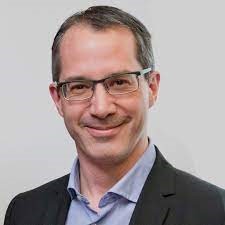
Professeur titulaire, École de physiothérapie et d'ergothérapie, Université McGill
Membre chercheur régulier
IURDPM, HJR, Santé Québec Centre-Sud-de-l'Île-de-Montréal - Universitaire, Santé Québec Laval
Autre(s) responsabilité(s) au CRIR :
Co-directeur scientifique du CRIR et de l'Institut universitaire sur la réadaptation en déficience physique de Montréal (IURDPM), CIUSSS du Centre-Sud-de-l'Île-de-Montréal, Co-directeur de Société Inclusive
Parcours académique
- Baccalauréat, Physique, Université McGill, 1990
- Baccalauréat, Ergothérapie, Université McGill, 1993
- Maitrise de recherche, Génie biomédical, Université de Montréal, 1997
- Doctorat, Neurosciences, Université de Montréal, 2003
- Postdoctorat, Neurophysiologie, Union degli Universitari Roma, Rome, Italie, 2006
Axe de recherche
Axe 1: Fonctions et activités sensorielles, motrices et cognitives
Unité thématique de recherche
Unité thématique 1. Mécanismes fonctionnels
Laboratoire de recherche
-
Laboratoire des technologies avancées en réadaptation
https://atrehab.ca - Laboratoire vivant de recherche biomédicale et d’informatique pour les avancées innovantes des nouvelles technologies en mobilité (BRILLIANT-Rehab)
-
Société inclusive
https://societeinclusive.ca
Intérêts de recherche
- Aides technologiques
- Aides à la mobilité
- Réadaptation du membre supérieur)
- Réalité virtuelle
- Recherche participative
- Contrôle moteur
Populations d’intérêt
Selon le groupe d’âge
- Adultes
- Personnes aînées
Selon le type d'incapacité
- Motrice
Publications
https://orcid.org/0000-0002-8656-4477
- Tessier, A., Latulippe, K., Routhier, F., Raymond, E., Fiset, D., Corcuff, M., & Archambault, P. S. (2024). Strengths and limitations of the Inclusive Society research model: an autoethnography. Disabil Rehabil, 46(11), 2259–2268. https://doi.org/10.1080/09638288.2023.2219067
- Faure, C., Routhier, F., Lettre, J., Choukou, M. A., & Archambault, P. S. (2023). Effectiveness of the miWe Simulator Training on Powered Wheelchair-driving Skills: A Randomized Controlled Trial. Arch Phys Med Rehabil, 104(9), 1371–1377. https://doi.org/10.1016/j.apmr.2023.04.022
- Yan, H., & Archambault, P. S. (2021). Augmented feedback for manual wheelchair propulsion technique training in a virtual reality simulator. J Neuroeng Rehabil, 18(1), 142. https://doi.org/10.1186/s12984-021-00936-x
- Norouzi-Gheidari, N., Archambault, P. S., & Fung, J. (2020). Changes in arm kinematics of chronic stroke individuals following "Assist-As-Asked" robot-assisted training in virtual and physical environments: A proof-of-concept study. Journal of Rehabilitation & Assistive Technologies Engineering, 7, 2055668320926054. https://doi.org/10.1177/2055668320926054
- Sathananthan, S., Blackburn, E., Kairy, D., Gagnon, D. H., Miller, W. C., Musselman, K., Routhier, F., & Archambault, P. S. (2025). Exploring the challenges in manual wheelchair operation for new users. Disabil Rehabil Assist Technol, 20(5), 1385–1394. https://doi.org/10.1080/17483107.2024.2448724