
CRIR Student Symposium – June 30, 2026: The rehabilitation of tomorrow starts today.
Some pages published before that date may still contain the former CISSS and CIUSSS designations.
When: 30 June 2026 08:30 to 30 June 2026 17:00
Where:
The CRIR Student Symposium will be held in person, in French and English | Registration required before June 15, 2026
📍 Location: Gingras‑Lindsay‑de‑Montréal Rehabilitation Institute (IRGLM), 6300 Avenue de Darlington, Montréal, QC, H3S 2J4, CRIR‑IURDPM Research Site – Gingras Pavilion
The 2026 CRIR Student Symposium offers an immersive day highlighting student research, innovation in rehabilitation, as well as interdisciplinary collaboration—both clinical and scientific—within CRIR.
Tuesday June 30, 2026, from 8:30 a.m. to 5:00 p.m.
📍 Location – In person: Saputo Amphitheatre and Charles‑U.-Létourneau Auditorium : Gingras‑Lindsay‑de‑Montréal Rehabilitation Institute (IRGLM) 6300 Avenue de Darlington, Montréal, QC, H3S 2J4 | CRIR‑IURDPM Research Site – Gingras Pavilion
🗣️ Language: The symposium will be held in French and English.
📍 Register now REGISTRATION IS CLOSED!
Members of the CRIR Student Committee are pleased to invite you to the 2026 CRIR Student Symposium, which will take place in person on Tuesday, June 30, 2026, under the theme: The rehabilitation of tomorrow starts today.
All CRIR members are invited to attend and support the next generation of researchers.
- The program will include laboratory tours and demonstrations of emerging rehabilitation technologies, offering participants the opportunity to gain a deeper understanding of innovations that support autonomy and inclusion for individuals with functional limitations. By bringing together diverse areas of expertise, the symposium will help strengthen interdisciplinary connections and promote applied, inclusive, and socially relevant research.
- The symposium will thus foster a comprehensive understanding of the complex needs in rehabilitation by encouraging dialogue across fields of practice and research.
Participants will have the opportunity to experience the richness of interprofessional collaboration through oral presentations, scientific posters, and networking activities with researchers and fellow students.
PROGRAM
🔵 8:30 a.m. to 9:00 a.m.: Participant Check-In | Main entrance, Gingras Pavilion – IRGLM
- Registration confirmation, morning refreshments and treats
🔵 9:00 a.m. to 9:15 a.m.: Welcome Remarks | Saputo Amphitheatre
- Presentation by the members of the student committee.
🔵 9:15 a.m. to 9:45 a.m.: Conference| Saputo Amphitheatre
From Deficits to Functioning: The WHO Approach to Sensory Impairment
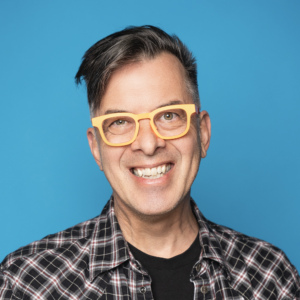
Walter Wittich, Ph.D. FAAO CLVT
Full Professor, School of Optometry, Université de Montréal
Adjunct Professor, School of Physical & Occupational Therapy, McGill University
Affiliate Assistant Professor, Department of Psychology, Concordia University
Regular Member and Site Director
CRIR–Lethbridge-Layton-Mackay Rehabilitation Center, MAB and Mackay sites, CIUSSS West-Central Montreal and
CRIR– Institut Nazareth et Louis-Braille, CISSS de la Montérégie-Centre
Biography
Walter Wittich, Professor at the School of Optometry at the Université de Montréal in Quebec, Canada, is dedicated to researching the rehabilitation of individuals facing both vision and hearing difficulties. He explores congenital and acquired dual sensory impairment or deafblindness, and how sensory difficulties interact with cognitive abilities. His most recent work focuses on global equity disparities and how they relate to sensory difficulties, as he represents Deafblind International on the World Health Organization’s Disability Health Equity Initiative. He is the inaugural chair of the Deafblind International Research Network, and the 2025 recipient of Perkins’ Anne Sullivan Medal.
CONFERENCE ABSTRACT
Rehabilitation professionals increasingly work with individuals whose health conditions affect not only body functions but also daily activities, participation, and engagement in society. This presentation introduces the World Health Organization’s (WHO) International Classification of Functioning, Disability and Health (ICF) as a framework for understanding disability from a rehabilitation perspective. Using examples from vision impairment, hearing loss, and deafblindness, the session demonstrates how disability emerges through the interaction between health conditions, personal factors, and environmental contexts. Particular attention is given to the development and application of WHO ICF Core Sets, standardized tools that help identify the aspects of functioning most relevant to specific populations. The presentation highlights how these tools support assessment, goal setting, interdisciplinary collaboration, outcome measurement, and service planning. Finally, the session explores how rehabilitation professionals can contribute to global efforts aimed at improving disability inclusion, health equity, and participation across the lifespan. Through clinical examples and international perspectives, participants will gain practical insights into applying the ICF framework to contemporary rehabilitation practice.
9:45 a.m.: BREAK
🔵 9:45 a.m. to 11:30 a.m.: Lab tours and demonstrations of emerging rehabilitation technologies
- CRIR-IURDPM lab tour – 4th floor, Gingras Pavilion
- Cime Program | Dorothy Bartélemy, Diana Zidarov and Marika Demers
- Ensemble Program | Dahlia Kairy, Marika Demers, Sylvie Nadeau, Johanne Higgins and Cyril Duclos
- Presentations and demonstrations by researchers from CRIR sites | Saputo Amphitheater:
-
Levier Program and “Human Landscape” Exhibition (collective artwork) | Anne Hudon, researcher at CRIR-Institut universitaire sur la réadaptation en déficience physique de Montréal (IURDPM)
-
UTech Directory | Claudine Auger, CRIR researcher at CRIR-Institut universitaire sur la réadaptation en déficience physique de Montréal (IURDPM)
-
Laboratory on Aphasia, Innovation, and Rehabilitation (LAIR) | Carole Anglade, CRIR researcher at CRIR-Institut universitaire sur la réadaptation en déficience physique de Montréal (IURDPM)
-
Martiniello Braille Research Lab | Natalina Martiniello, CRIR researcher at CRIR-Nazareth and Louis-Braille Institute (INLB) and CRIR-Lethbridge-Layton-Mackay Rehabilitation Center (LLMRC)
-
Inclusive Mobility Innovation Lab – Edge A‑Eye Project | Joe Nemargut, CRIR researcher at CRIR-Nazareth and Louis-Braille Institute (INLB) and CRIR-Lethbridge-Layton-Mackay Rehabilitation Center (LLMRC)
-
11:30 a.m. to 12:30 p.m.: NETWORKING LUNCH | Saputo Amphitheatre
🔵 Self-guided tour: Exhibition: “Together for an Inclusive Future” | Main entrance, Gingras Pavilion – IRGLM
🔵 12:30 p.m. to 2:00 p.m.: Oral Presentations | Charles‑U.-Létourneau Auditorium
- 7 oral presentations (10 minutes each), including a short Q&A session
- 11 “Elevator pitch” presentations (1 minute each)
28 – 12:30 p.m.: Prajjol Raj Puri, Deborah Annan, Sergio Mejia Romero, Soutongnoma Safiata Kabore, Nathalie Gingras Royer, Kim Khoa Nguyen, Joseph Paul Nemargut
✨ Improving Clinical Navigation for People with Visual Impairments: Insights from Real-World Scenarios
29 – 12 :40 p.m.: Pauline Lemersre, Jonathan Gervais Hupé, Alexandre Mathieu Fritz, Annie Carrier, Arthur Filleul, Nathan Bourges, Anne Hudon, Diana Zidarov>
✨ Mieux comprendre les enjeux éthiques et sociaux associés aux usages des réseaux sociaux en physiothérapie, une synthèse critique interprétative
30s – 12 :50 p.m.: Fatimata Ouédraogo, Dahlia Kairy, Marika Demers, Karla Rodrigues Soares Menezes
✨ Utilisation de montres intelligentes pour mesurer objectivement l’activité du membre supérieur après un AVC: résultats préliminaires d’une étude de faisabilité
31s – 1:00 p.m.: Emna Fakhfakh, Eve Nadeau, Stéphane Bouchard, Carole Anglade
✨ Comment soutenir la réadaptation des troubles de la communication pour la reprise d’interactions de service grâce à la réalité virtuelle ? Un projet en cocréation
32 – 1:10 p.m.: Sébastien Finlay, Lucie Ménard, Frédérique Poncet, Ingrid Verduyckt
✨ « Je me reconnais à fond dans le Mini-KIDS »: une exploration des croyances et de l’identité professionnelle dans la mise en œuvre d’une nouvelle intervention orthophonique en bégaiement
33 – 1:20 p.m.: Nok-Yeung Law, Shanie Desrosiers, Sinthiya Sivanesan, Helga Tonkov, Frédéric Charron, Frédéric Bretzner, Myriam Srour, Dorothy Barthélemy
✨ Neural Mechanisms of Impaired Interlimb Coordination in Individuals with DCC Gene Variants: Implications for gait and balance
34 – 13:30 p.m.: Sujata Sinha, Lexie Lancon, Amina Ait Mouhoub, Heloise Marie Lu Bourgeois, El‑Mehdi Meftah, Lucie Chesne, Victoria Duda, Diana Zidarov, Marika Demers, Dorothy Barthelemy
✨ A step towards rehabilitation for cervical spinal cord injury at sub-acute stage: combining transcutaneous spinal cord stimulation with activity-based therapy
“Elevator pitch” presentations
1:40 p.m. to 2:00 p.m.: “Elevator pitch” presentations 😉| Charles‑U.-Létourneau Auditorium
- 11 “Elevator pitch”presentations 😉
- Modérator Shirley Dumassais
2:00 p.m.: BREAK
🔵 2:15 p.m. to 3:45 p.m.: Poster Presentations | Saputo Amphitheatre
- During this 90-minute session, you will have the opportunity to learn about the research projects of 27 students.
Student presentations
Master’s level
01 – Meghan Gallagher¹, Michaela Field¹, Faith Murray¹, Sophie Tremblay¹, Emma Corona², Frédérique Poncet²˒³, Aliki Thomas¹
¹Université McGill, Montréal, Canada, ²Centre de réadaptation Lethbridge‑Layton‑Mackay, Montréal, Canada, ³Centre de recherche interdisciplinaire en réadaptation (CRIR), Montréal, Canada
✨ Supporting meal preparation autonomy in adults with neurological conditions: a rapid review of strategies and recommendations 😉
02 – Sarah Dahman¹˒², Héloïse Bourgeois², Nok‑Yeung Law²˒³, Dorothy Barthélemy²˒³
¹Département de neurosciences, Faculté de médecine, Université de Montréal, Montréal, Canada, ²Centre de recherche interdisciplinaire en réadaptation du Montréal métropolitain, Montréal, Canada, ³École de réadaptation, Faculté de médecine, Université de Montréal, Montréal, Canada
✨ Modulation de réflexes intermembres lors du pédalage chez l’adulte: données préliminaires
03 – Josée Asselin¹˒², Isabelle Croteau¹˒², Émile Bonnici¹˒², Diana Zidarov¹˒², Felipe Verdugo¹˒², Anouk Lamontagne³˒⁴, Myriam Villeneuve³˒⁴, Johanne Higgins¹˒², Marika Demers¹˒²
¹Université de Montréal, Montréal, Canada, ²Institut universitaire sur la réadaptation en déficience physique de Montréal, Montréal, Canada, ³Université McGill, Montréal, Canada, ⁴Hôpital général juif, Montréal, Canada
✨ Intégration des arts en réadaptation: co-développement d’un programme d’entraînement au piano personnalisé pour les personnes vivant avec la sclérose en plaques 😉
04 – Maxime Savoie¹, Justine Cornot¹, Frédérique Poncet², Hannah Boxerman²
¹Université de Montréal, Montréal, Canada, ²Centre de réadaptation Lethbridge‑Layton‑Mackay, Montréal, Canada
✨ Co-construction et validation d’une évaluation écologique des compétences des personnes ayant une déficience visuelle 😉
05 – Émile Dupras1,2, Amedeo Ceglia¹˒², Dorothy Barthelemy³
¹Université de Montréal, Montréal, Canada, ²Institut de réadaptation Gingras‑Lindsay de Montréal, Montréal, Canada, ³Centre de recherche interdisciplinaire en réadaptation, Montréal, Canada
✨ La fonction du membre supérieur et les adaptations neurophysiologiques suivant le transfert nerveux chez une population tétraplégique 😉
06 – Hamidreza Aminparvin¹˒², Ali Raad¹, Walter Wittich¹˒², Julie Renaud¹, Claude Vincent³˒⁴, Helen Zhu¹, Vaishnavii Saravanamuthu¹, Claudine Auger¹˒²
¹Université de Montréal, Montréal, Canada, ²Centre de recherche interdisciplinaire en réadaptation (CRIR), Montréal, Canada, ³Université Laval, Québec, Canada, ⁴Centre interdisciplinaire de recherche en réadaptation et intégration sociale, Québec, Canada
✨ Développement et évaluation formative d’un questionnaire numérique de suivi des aides technologiques visuelles pour la lecture chez les aînés ayant une basse vision
07 – Matty Beaudry¹, Evelina Pituch¹˒², Brigitte Vachon¹˒³
¹Université de Montréal, Montréal, Canada, ²Centre de recherche interdisciplinaire en réadaptation, Montréal, Canada, ³Institut universitaire en santé mentale de Montréal, Montréal, Canada
✨ Perspective des parents de l’acceptabilité des interventions en ergothérapie offertes dans le cadre du programme agir tôt au Québec: Protocole d’une étude mixte
08 – Noemie Olmand¹˒²˒³˒⁴, Phaedra Royle², Natacha Trudeau²
¹École d’orthophonie et d’audiologie, Faculté de médecine, Université de Montréal, Montréal, Canada, ²Centre de recherche interdisciplinaire en réadaptation, Montréal, Canada, ³Centre de recherche sur le cerveau, le langage et la musique, Montréal, Canada, ⁴Centre de recherche de l’Institut universitaire en santé mentale de Montréal, Montréal, Canada
✨ Adaptation et validation d’un inventaire parental du développement lexical en créole haïtien chez des enfants âgés de 8 à 30 mois en contexte bilingue québécois
09 – Deborah Annan¹, Prajjol Raj Puri¹˒², Kaboré Soutongnoma Safiata¹˒²˒³˒⁴, Natalie Gingras‑Royer¹˒², Alexandre Uwimana¹˒², Sergio Mejia Romero¹˒², Joseph Paul Nemargut¹˒²˒⁵˒⁶
¹École d’optométrie, Université de Montréal, Montréal, Canada, ²Centre de recherche interdisciplinaire en réadaptation du Montréal métropolitain, Montréal, Canada, ³École de santé publique, Université de Montréal, Montréal, Canada, ⁴Centre de recherche en santé publique, Montréal, Canada, ⁵Institut Nazareth et Louis‑Braille du Centre intégré de santé et de services sociaux de la Montérégie‑Centre, Longueuil, Canada, ⁶Centre de réadaptation Lethbridge‑Layton‑Mackay du Centre intégré universitaire de santé et de services sociaux du Centre‑Ouest‑de‑l’Île‑de‑Montréal, Montréal, Canada
✨ Mobility as participation: a life-h–informed video analysis of indoor navigation during a simulated optometry visit of visually impaired
10 – Madeline Heleno¹, Liziane Bouvier¹˒²
¹École des sciences de la communication humaine, Université McGill, Montréal, Canada, ²Centre de recherche interdisciplinaire en réadaptation du Montréal métropolitain – Institut universitaire sur la réadaptation en déficience physique de Montréal, Montréal, Canada
✨ Effectiveness of an adapted motor speech intervention in a case of speech-induced primary lingual dystonia 😉
PhD level
11 – Mahmoud AboAlfa¹, Sara Ahmed¹
¹Université McGill, Montréal, Canada
✨ Functional integrated rehabilitation model – Five domains (FIRM-5) an integrated, ICF-aligned framework for musculoskeletal rehabilitation 😉
12 – Tiffany Te1,2, Matthew Hunt1,2, Anne Hudon2,3
¹Université McGill, Montréal, Canada, 2Centre de recherche interdisciplinaire en réadaptation du Montréal métropolitain, Montréal, Canada, 3Université de Montréal, Montréal, Canada
✨ Addressing ethical issues in interdisciplinary collaboration in TBIi rehabilitation: a participatory co-creation approach
13 – Arthur Filleul¹, Aurélie Garceau², Bruno Trudel³, Simon Cousineau⁴, Marjorie Vinet⁴, Malgoratza Depa⁴, Eric Racine¹, Anne Hudon¹
¹Université de Montréal, Montréal, Canada, ²Laboratoire d’éthique vivante en réadaptation, Montréal, Canada, ³Secteur accident vasculaire cérébral, Montréal, Canada, ⁴’Institut de réadaptation Gingras‑Lindsay de Montréal, Montréal, Canada
✨ Enjeux éthiques liés à l’allocation des ressources limitées en réadaptation: Un projet de coconstruction fondé sur une posture d’éthique vivante
14 – Pauline Sabalette¹, Cyril Duclos¹˒², Diana Zidarov¹˒², Dorothy Barthélemy¹˒², Nancy Dubé¹, Philippe Ménard¹, Roxane Bouvrette¹, Élizabeth Arias‑Moreno¹, Mélanie Labelle¹, Catherine Proulx³
¹Institut universitaire sur la réadaptation en déficience physique de Montréal – Centre de recherche interdisciplinaire en réadaptation du Montréal métropolitain, Montréal, Canada, ²École de réadaptation, Université de Montréal, Montréal, Canada, ³Conseil national de recherches Canada
✨ La marche visuo-proprioceptive pour diminuer la douleur neuropathique après une lésion de moelle épinière
15 – Nok‑Yeung Law¹, Karima Ahmed², Yahia², Joseph Gill‑Lussier¹, Ali Falaki², Helga Tonkov², Faezeh Abbariki¹, Andréa Faust³, José A. Morais³, Guy Hajj‑Boutros³, Dorothy Barthélemy¹
¹Université de Montréal, Montréal, Canada, ²Centre de recherche interdisciplinaire en réadaptation du Montréal métropolitain, Montréal, Canada, ³Université McGill, Montréal, Canada
✨ Impact of 14-day head-down bed rest with or without exercise countermeasures on standing balance control 😉
16 – Jules Lavoie¹, Philippe Archambault¹˒², Félix Chénier³
¹Université McGill, Montréal, Canada, ²Centre de recherche interdisciplinaire en réadaptation du Montréal métropolitain, Montréal, Canada, ³Université du Québec à Montréal, Montréal, Canada
✨ Optimisation de la biomécanique de la propulsion en fauteuil roulant dans un simulateur de réalité virtuelle 😉
17 – Viviane Hélène Tchinda Matong¹, Manouche Casimir², Billy Vinette¹, Fannie Tremblay‑Racine², Annie Rochette¹˒²˒³, Marie‑France Deschênes¹˒²˒³
¹Faculté des sciences infirmières, Université de Montréal, Montréal, Canada, ²Institut universitaire sur la réadaptation en déficience physique de Montréal, Montréal, Canada, ³Centre de recherche interdisciplinaire en réadaptation du Montréal métropolitain, Montréal, Canada
✨ Les compétences infirmières en réadaptation physique : Une revue de la portée 😉
18 – Lexie Lançon¹, Amedeo Ceglia²˒³, Dorothy Barthélemy¹˒², Diana Zidarov¹˒², Marika Demers¹˒²
¹École de réadaptation, Faculté de médecine, Université de Montréal, Montréal, Canada, ²Centre de recherche interdisciplinaire en réadaptation du Montréal métropolitain, Montréal, Canada, ³Université de Sherbrooke, Sherbrooke, Canada
✨ Analyse cinématique sans marqueurs de la tâche de boire après lésion médullaire cervicale : Preuve de concept 😉
19 – Katherine Samuel¹˒², Houyar Djahanbakhsh Asli¹˒², Denis Laroche³, Stéphanie Grenier³, Mark Hewko³, Camille E. Proulx¹˒², Dany H. Gagnon¹˒², Johanne Higgins¹˒², Marika Demers¹˒²
¹École de réadaptation, Université de Montréal, Montréal, Canada, ²Institut universitaire sur la réadaptation en déficience physique de Montréal – Centre de recherche interdisciplinaire en réadaptation du Montréal métropolitain, Montréal, Canada, ³Conseil national de recherches Canada, Montréal, Canada
✨ Lessons learned from co-developing a novel hand rehabilitation system for stroke rehabilitation
20 – Shakiba Ghafari¹˒², Miriam Gonzalez¹, Zsofia Zambo¹, Jinane Zeidan¹, Roberta Cardoso³, Derrick Cogburn⁴, Keiko Shikako¹˒²˒⁴ et le groupe de recherche BeyondC
¹École de physiothérapie et d’ergothérapie, Université McGill, Montréal, Canada, ²Centre de recherche interdisciplinaire en réadaptation du Montréal métropolitain, Montréal, Canada, ³Institut de recherche du Centre universitaire de santé McGill, Montréal, Canada, ⁴American University, Washington, États‑Unis
✨ Beyond convention: How the UN convention on the rights of persons with disabilities has been implemented in Canada
21 – Amedeo Ceglia¹, Adnane Remchani², Lucie Chesné², Sarah Dahman⁴, Andréa Moreault³, Josée Lamarche³, Sujata Sinha², Dorothy Barthélemy²
¹Département de neurochirurgie, Université de Sherbrooke, Sherbrooke, Canada ²École de réadaptation, Université de Montréal, Montréal, Canada ³Centre de recherche interdisciplinaire en réadaptation du Montréal métropolitain, Montréal, Canada ⁴Département de neurosciences, Université de Montréal, Montréal, Canada
✨ Assessing the benefits of functional electrical stimulation during intensive cycling training in subacute spinal cord injury rehabilitation
22 – Émile Bonnici¹, Dahlia Kairy¹˒², Cyril Duclos¹˒², Johanne Higgins¹˒², Sylvie Nadeau¹˒², Manon Perez¹˒², Felix Chenier³, Rachid Aissaoui³, David Labbé³, Marika Demers¹˒²
¹Centre de recherche interdisciplinaire en réadaptation du Montréal métropolitain (CRIR), Montréal, Canada ², Université de Montréal, Montréal, Canada ³École de technologie supérieure, Montréal, Canada
✨ La rétroaction offerte par les technologies : Phase 1 d’une étude observationnelle sur la rétroaction au parc technologique
23 – Soutongnoma Safiata Kaboré¹˒², Deborah Annan¹˒², Prajjol Raj Puri¹˒², Hassane Alami³˒⁴, Kim Khoa Nguyen⁵, Joseph Paul Nemargut¹˒²˒⁶˒⁷
¹École d’optométrie, Université de Montréal, Montréal, Canada ; ²Centre de recherche interdisciplinaire en réadaptation du Montréal métropolitain, Montréal, Canada ; ³Centre de recherche en santé publique, Montréal, Canada ; ⁴École de santé publique, Université de Montréal, Canada ; ⁵École de technologie supérieure, Montréal, Canada ; ⁶Institut Nazareth et Louis‑Braille du Centre intégré de santé et de services sociaux de la Montérégie‑Centre, Longueuil, Canada ; ⁷Centre de réadaptation Lethbridge‑Layton‑Mackay du Centre intégré universitaire de santé et de services sociaux du Centre‑Ouest‑de‑l’Île‑de‑Montréal, Montréal, Canada
✨ EDGE A EYE : Système intelligent de navigation intérieure pour les personnes en situation de handicap visuel au Canada
24 – Ateayeh Bayat¹, Félix Chénier²
¹École de technologie supérieure, Montréal, Canada ; ²Université du Québec à Montréal, Montréal, Canada
✨ From simulator validation to real-time biofeedback in manual wheelchair propulsion
25 – Alain Patrick Ishimwe¹˒², Lucie Chesné², Mehdi El-Meftah², Cyril Duclos¹˒², Dorothy Barthélemy¹˒².
¹Université de Montréal, Montréal, Canada, ²Centre de recherche interdisciplinaire en réadaptation du Montréal métropolitain, Montréal, Canada ✨ Entraînement sensoriel multimodal comme levier pour améliorer la fonction motrice chez les personnes atteintes de lésions de la moelle épinière
26 – Jonathan Dion¹, François Champoux¹, Maxime Maheu¹˒²
¹Université de Montréal, Montréal, Canada, ²Centre de recherche interdisciplinaire en réadaptation du Montréal métropolitain, Montréal, Canada
✨ Influence de l’âge sur la réponse vestibulaire perceptuelle et réflexe en fonction de la fréquence de stimulation : Résultats préliminaires
Postdoctoral/Research fellow level
27 – Feriel Ines Antri Bouzar¹, Stéphanie Younes¹, Ingrid Verduyckt¹
¹École d’orthophonie et d’audiologie, Université de Montréal, Montréal, Canada
✨ Validation d’une banque de voix dysphoniques simulées 😉
🔵 3:45 p.m. to 4:45 p.m.: Closing reception for CRIR’s 25th anniversary and awards ceremony for the best student presentations | Saputo Auditorium
- Closing remarks and conclusion of the CRIR’s 25th anniversary: Claudine Auger, Scientific Co-Director of the CRIR
- Awards ceremony for the best student presentations at the conference – Thank you to our sponsors!
- Best POSTER Presentation – Centre for Interdisciplinary Research in Rehabilitation in Metropolitan Montreal (CRIR)
- Best ORAL Presentation – Fonds de recherche Québec (FRQ)
- Best CLIN D’OEIL Presentation – Fonds de recherche Québec (FRQ)
- Best ACCESSIBLE Presentation – Vision Sciences Research Network (RRSV)
_______________________________________________________________
_______________________________________________________________
✨ ACKNOWLEDGMENTS:
The CRIR Student Symposium 2026 is made possible thanks to the valuable support of our partners.
We would like to express our sincere appreciation to the Centre for Interdisciplinary Research in Rehabilitation of Greater Montreal (CRIR), the Vision Science Research Network, the Fonds de recherche du Québec (FRQ), as well as McGill University for their support of this initiative, which promotes knowledge sharing and the engagement of the next generation in research.



We look forward to welcoming you!
Student Representatives for Axes 1 and 2
Axis 1: Shirley Dumassais
Axis 2: Fatimata Ouédraogo
Student Representatives from CRIR Sites
Institut universitaire sur la réadaptation en déficience physique de Montréal (IURDPM):
Sébastien Finlay, Lexie Lançon, and Fatimata Ouédraogo
Institut Nazareth et Louis-Braille (INLB):
Shirley Dumassais
Jewish Rehabilitation Hospital (JRH):
Azba Shaikh and Dolev Yissar
Lethbridge‑Layton‑Mackay Rehabilitation Centre (LLMRC):
Mahmoud Abo Alfa and Mannat Madan
____________________________________________
CRIR | May 7, 2026 – Revised: June 1, 2026