
Vestibular Research Laboratory – Vestibulab
Description
Our laboratory’s research aims to understand the mechanisms leading to the chronicity of vestibular symptoms and to develop effective rehabilitation strategies. We seek to improve the early detection of vestibular dysfunction and to optimize rehabilitation approaches in order to promote faster and more sustainable recovery. To achieve this, we combine experimental and clinical methods that allow us to explore vestibular function from multiple perspectives.
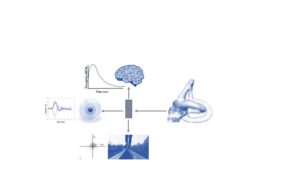
Our work relies on various vestibular stimulation techniques, such as galvanic and caloric stimulation, which selectively target vestibular pathways. We then record associated physiological and behavioral responses, including the analysis of eye movements (videonystagmography, video head impulse test), the assessment of postural control (force platforms, inertial sensors), and the measurement of vestibular evoked myogenic potentials (VEMP). We also use virtual reality, which provides controlled immersive environments to study perception, body representation in space, and adaptation mechanisms under sensory conflict.
Our laboratory maintains close collaborations with clinical settings, which fosters the rapid transfer of knowledge into practice. This proximity allows us to evaluate our approaches directly with patients and to adapt our research methods to clinical realities.
By combining these approaches, our goal is to better characterize the neurophysiological processes underlying chronic vestibular disorders and to propose innovative rehabilitation methods. In doing so, we aim not only to improve the quality of life of individuals living with vestibular dysfunction but also to advance fundamental knowledge on the role of the vestibular system in stability, spatial orientation, and motion perception.
Key-words
Vestibular disorders, Meniere, PPPD, Labyrinthitis/Vestibular neuronitis, Vestibular rehabilitation
MAIN RESEARCH EQUIPMENT/INFRASTRUCTURE (IF APPLICABLE) AND LOCATION
CIUSSS du Centre-Sud-de l’Ïle-de-Montréal : Institut universitaire sur la réadaptation en déficience physique de Montréal (IURDPM)
- Galvanic vestibular stimulation
- Virtual reality
- Force platform
- Inertial Measurement Units
- Evoked Myogenic Potentials
- Videonystagmography
- Video head impulse test
Axis and research theme
AXIS 1 – Sensory, Motor and Cognitive Functions and Activities
THEME 1 – Functional Mechanisms
Research team
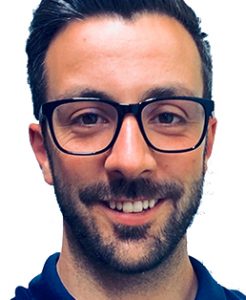
Assistant Professor, School of Speech-Language Therapy and Audiology, Université de Montréal;
Regular Researcher, CRIR—Institut universitaire sur la réadaptation en déficience physique de Montréal (IURDPM), Laurier pavilion, CIUSSS du Centre-Sud-de-l’Île-de-Montréal
Contact information
 Vestibulab
CRIR–IURDPM : IRD site
2222 Laurier East, suite 504
Montrreal, Qc, H2H 1C4
Email: maxime.maheu.1@umontreal.ca
Facebook : https://www.facebook.com/vestibulab